• Zum Hauptinhalt springen
  • Zum Footer springen

IPEK

  • ABOUT US
    • INSTITUTE DIRECTOR
    • ORGANISATION
    • PEOPLE A-Z
    • T&H EDITORIAL OFFICE
    • AUGUST - LENZ
    • FREY - WERLE
    • VISIT US
    • CONTACT US
  • LABS
    • ATZLER LUTGENS LAB
    • BARTELT LAB
    • DÖRING LAB
    • DUCHÊNE MEGENS LAB
    • HUNDELSHAUSEN LAB
    • MOHANTA HABENICHT LAB
    • RIES LAB
    • SANTOVITO LAB
    • SCHOBER LAB
    • STEFFENS LAB
    • WEBER LAB
  • TECHNOLOGY
    • MICROSCOPY
    • TRANSGENIC & GENE TARGETING
    • CELL SORTING & FLOW CYTOMETRY
    • (EPI)TRANSCRIPTOMIC CORE UNIT
  • PUBLICATIONS
  • FUNDING
  • EDUCATION
    • TEACHING
    • GRADUATE SCHOOL
  • NEWS | REPORTS
    • NEWS
    • EVENTS
    • REPORTS
    • OPEN POSITIONS
  1. HOME
  2. NEWS | REPORTS
  3. NEWS
  4. Cell Death & Diff. 2024
News | 15/10/2024 | News, Publication
CELL DEATH & DIFFERENTIATION 2024

Oxidative stress: how protein recycling protects against cell death

➤ IPEK scientists from the Bartelt Lab  have discovered a new molecular switch that protects against cell death.

Programmed cell death protects the body against cancer and other diseases. A team of researchers from the Bartelt Lab has decoded a new mechanism by which oxidative stress influences cell death. The researchers hope this discovery will lead to novel approaches for targeting cancer cells and other diseases. Their findings were recently published in the journal Cell Death & Differentiation.

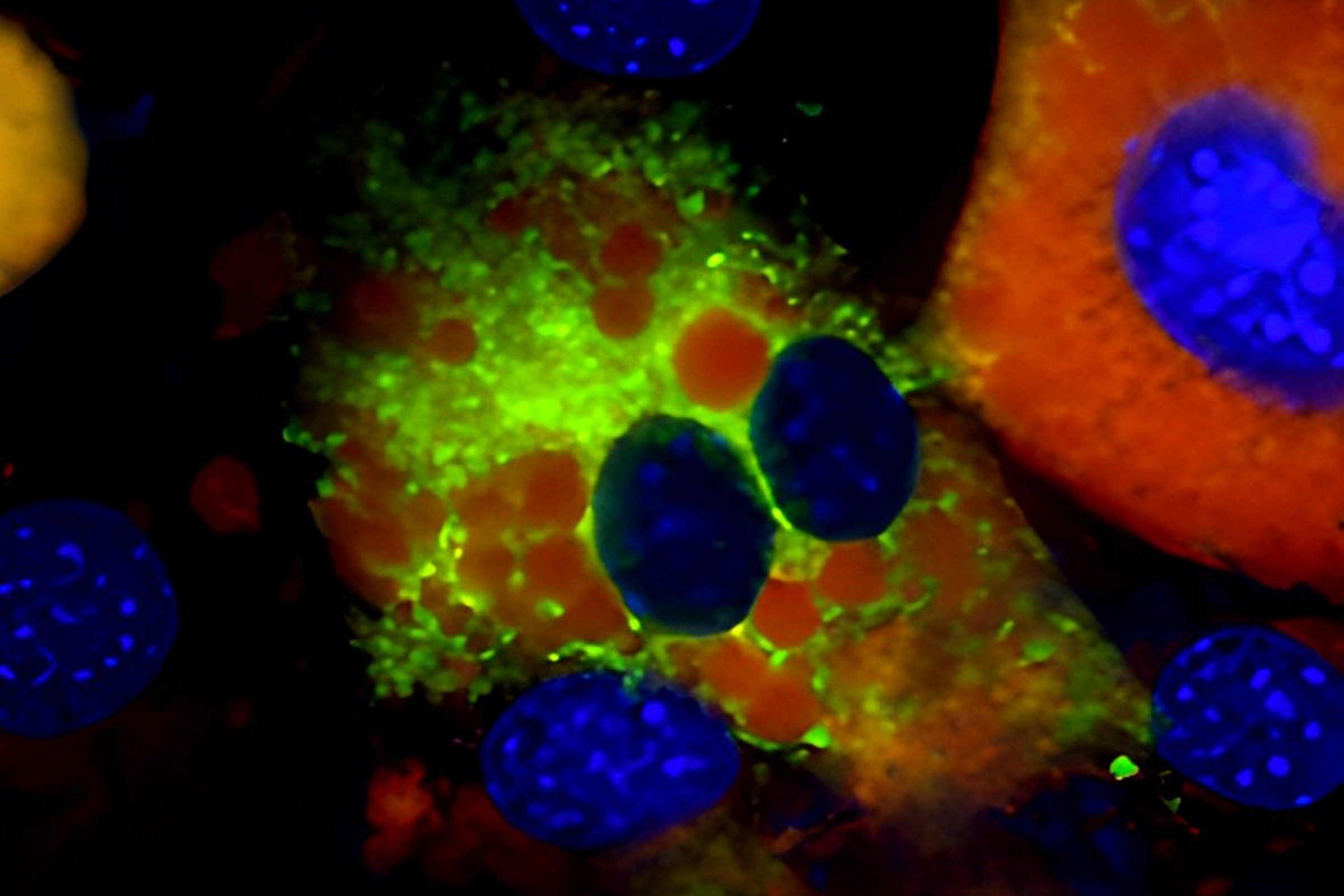
When the lipids in the plasma are attacked, it is referred to as ferroptosis. In a chain reaction, the lipid molecules that make up the membrane are being destroyed and the cell literally dissolves. “Ferroptosis is a recently discovered form of cell death and we’re searching for ways to control the process,” says Bartelt. The team concentrated on the proteasome, which functions as a sort of recycling bin for the cell. Through the operations of the proteasome, old or damaged proteins are broken down and made available to the cell again.

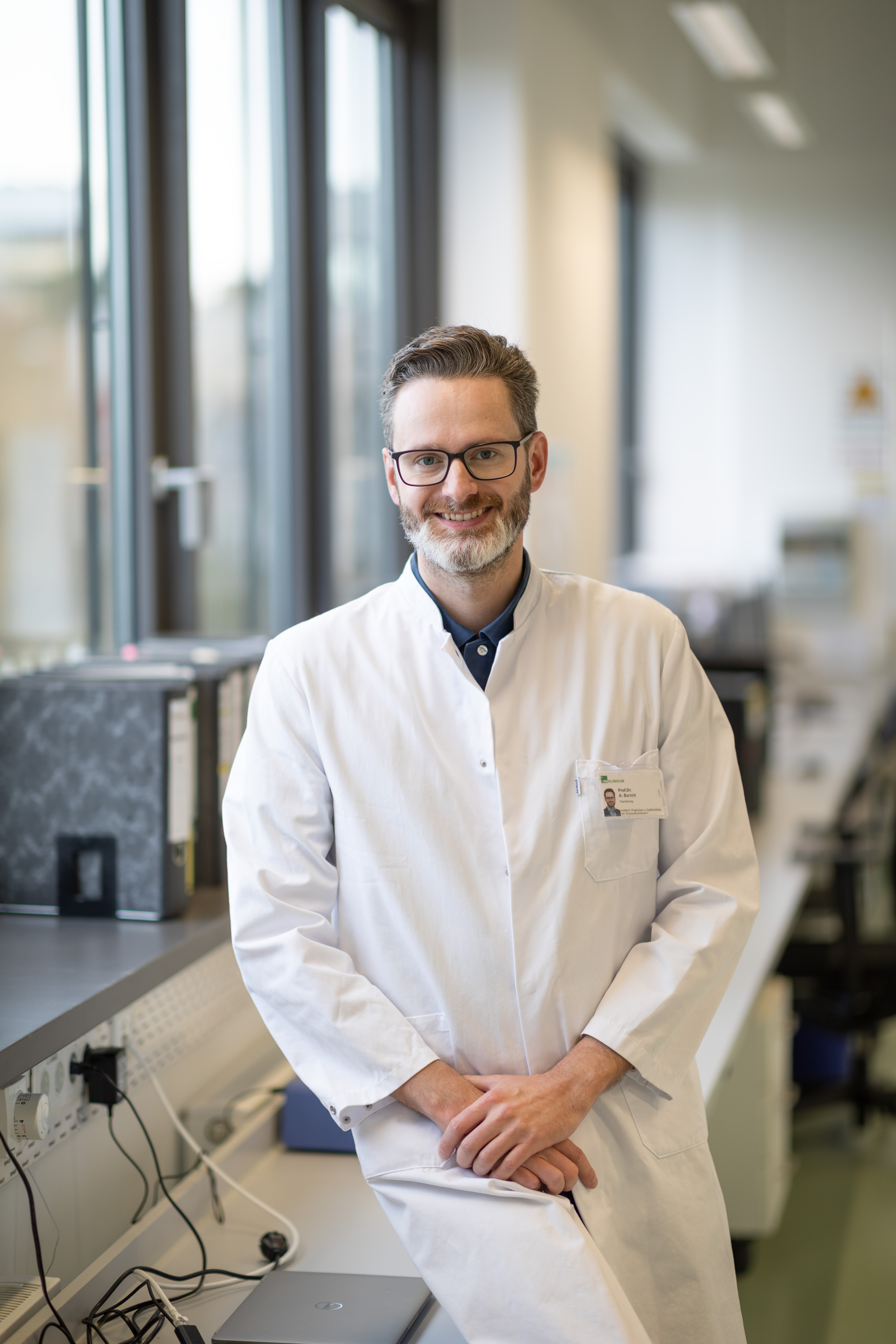
Alexander Bartelt

View through the microscope: Cell undergoes ferroptosis

© Alexander Bartelt

Using state-of-the-art methods of mass spectrometry, the team investigated whether the recycling of proteins is disrupted during ferroptosis. In this way, the researchers found that the proteasome is effectively clogged up, accelerating cell death. At the same time, they identified the enzyme DDI2, which cranks up the recycling again and protects against cell death. “DDI2 is a protease – a type of enzyme it’s possible to therapeutically influence,” says Anahita Ofoghi, who carried out the study.

The findings point to a new way of manipulating cell death. This could be relevant not only for new cancer therapies, but also indicates how we might be able to protect healthy cells against death. “We’ve contributed a small piece to the fascinating puzzle of ferroptosis,” says Bartelt. The authors now hope to exploit this molecular mechanism for therapies.

Sources

  • LMU Press Release
  • LMU Klinikum Newsmeldung
  • DZHK Press Release
  • CELL DEATH & DIFF. 2024

Research Lab

  • Bartelt Lab
LMU Klinikum

“We’ve contributed a small piece to the fascinating puzzle of ferroptosis,”

Alexander Bartelt

CRC1123

Munich Heart Alliance

TRR 267

SyNergy

CNATM

CONTACT US

Institute for Cardiovascular Prevention (IPEK)

Institute Director: Christian Weber

Pettenkoferstraße 9
80336 München
0049 (0)89 4400-54351 0049 (0)89 4400-54298

 ipek.office[at]med.lmu.de

QUICK LINKS

  • RESEARCH LABS
  • A-Z PEOPLE
  • DOWNLOADS
  • OPEN POSITIONS
  • LMU HOSPITAL
  • LMU UNIVERSITY

Editor login
Imprint | Data-Safety